Land unsold after three tax sales goes with no right to redeem at all, and a house on three acres can be outside the state septic rules.
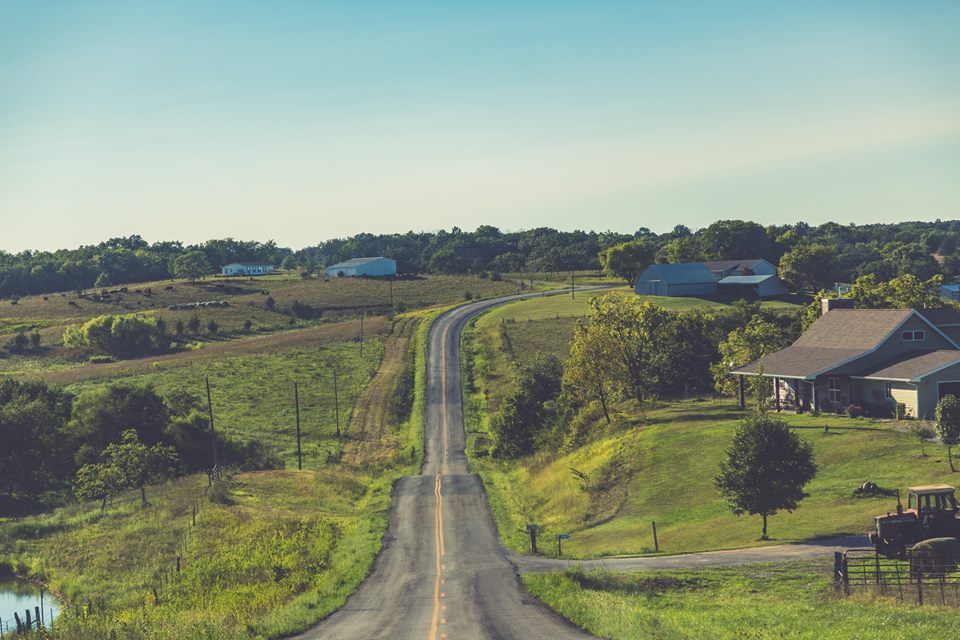

$5,200 an acre is the average for farm real estate here, against $4,500 nationally (NASS, 2026). Pasture averages $2,850.
Land sold for back taxes
County collectors hold the tax sale on the fourth Monday in August. The owner has an absolute right to redeem for a year, and can still redeem after that until the buyer has a deed. To get one, the buyer must have a licensed attorney or title company search the title and send notice of the right to redeem by first-class and certified mail at least 90 days before the deed; a buyer who skips a step loses everything. Land unsold two years running goes to a third offering, with 90 days to redeem. Land still unsold after that is offered every 30 days, and its buyer gets a collector's deed at once, with no redemption.
What to do: Ask the county collector for the land left over from third offerings, which comes with a deed straight away. At an ordinary sale, budget for the title search and the certified mail, or the money is lost.
Source: RSMo 140.150; RSMo 140.250; RSMo 140.340; RSMo 140.405
Septic before you build
Missouri has had statewide minimum standards since 1996, and a permit is generally needed before a system is built or repaired. In most counties the health department issues it; elsewhere it may be a sewer district, the building department or planning and zoning, and local rules can be stricter. A single house on three acres or more is outside the state rules if every part of the system is more than ten feet from the property lines and no sewage leaves the land, pollutes or becomes a nuisance, unless the lot borders a Corps of Engineers or utility lake.
What to do: Ask the county who issues septic permits there and what they require. The three-acre exemption is from the state rules, not from a stricter county's.
Source: Missouri DHSS, Onsite Wastewater Treatment; RSMo 701.031
Being taxed as a farm
Land devoted mainly to crops, livestock, horses or dairying, including land in federal conservation programs, is valued at what it is worth for farming and assessed at 12 percent of that, against 19 percent for homes. The statute sets no minimum acreage. The house and the land that goes with it are residential. The classification follows the use, not the owner.
What to do: Keep it farmed and the land stays agricultural after you buy it. If you change what it is used for, the assessor reclassifies it on application.
Source: RSMo 137.016; RSMo 137.017; RSMo 137.115
Old well records
Under the Water Well Drillers Act, every new well and pump installation must be reported to the Missouri Geological Survey on certification forms within 60 days. The Survey's WISDIM map shows the wells and their records.
What to do: Find the parcel on the map and read the records of the nearest wells for their depth.
Source: RSMo 256.614; Missouri DNR, WISDIM
Laws change. Check the source before you rely on a date or a deadline, and ask the county office named, because local rules sit on top of these.
Missouri counties, cheapest farmland first
What farmland and its buildings were worth an acre in each of the 114 counties in the 2022 Census of Agriculture, with the median value of a home. These compare one county with another; they are not the price of any parcel.
| county | Farmland an acre | Median home |
|---|---|---|
| Carter County | $2,342 | $159,400 |
| Shannon County | $2,396 | $157,500 |
| Wayne County | $2,495 | $107,400 |
| Oregon County | $2,560 | $113,300 |
| Madison County | $2,627 | $159,000 |
| Reynolds County | $2,655 | $151,700 |
| Iron County | $2,697 | $119,300 |
| Ozark County | $2,762 | $168,600 |
| Camden County | $2,851 | $305,400 |
| Ripley County | $2,855 | $119,600 |
| Crawford County | $2,882 | $172,600 |
| Howell County | $2,894 | $173,000 |
| Dent County | $2,920 | $167,500 |
| Washington County | $2,926 | $129,400 |
| Douglas County | $2,936 | $168,200 |
| Pulaski County | $3,020 | $189,800 |
| Maries County | $3,134 | $219,100 |
| Sullivan County | $3,213 | $115,600 |
| Texas County | $3,220 | $146,700 |
| Miller County | $3,272 | $192,600 |
| Wright County | $3,310 | $160,100 |
| Taney County | $3,385 | $218,800 |
| Osage County | $3,470 | $223,300 |
| Laclede County | $3,518 | $168,400 |
| Dade County | $3,520 | $170,600 |
| Hickory County | $3,566 | $176,100 |
| Bollinger County | $3,609 | $179,800 |
| Cedar County | $3,763 | $168,100 |
| Putnam County | $3,789 | $119,500 |
| Harrison County | $3,799 | $109,500 |
| Gasconade County | $3,826 | $179,900 |
| Howard County | $3,853 | $159,400 |
| Polk County | $3,857 | $205,800 |
| Worth County | $3,888 | $96,600 |
| Mercer County | $3,903 | $104,900 |
| McDonald County | $3,910 | $154,700 |
| Phelps County | $3,912 | $206,500 |
| St. Clair County | $3,962 | $157,100 |
| Vernon County | $4,000 | $158,800 |
| Stone County | $4,003 | $249,000 |
| Bates County | $4,006 | $170,800 |
| Benton County | $4,020 | $177,900 |
| Macon County | $4,026 | $149,100 |
| Henry County | $4,028 | $160,600 |
| Adair County | $4,098 | $165,700 |
| Barton County | $4,126 | $136,500 |
| Schuyler County | $4,152 | $137,500 |
| Jasper County | $4,178 | $166,900 |
| Dallas County | $4,179 | $190,300 |
| Linn County | $4,261 | $123,300 |
| Grundy County | $4,305 | $112,500 |
| Barry County | $4,384 | $187,800 |
| Perry County | $4,388 | $188,200 |
| Ste. Genevieve County | $4,393 | $222,200 |
| Gentry County | $4,448 | $134,000 |
| DeKalb County | $4,456 | $169,200 |
| Cass County | $4,459 | $292,400 |
| Lawrence County | $4,465 | $175,100 |
| Caldwell County | $4,467 | $166,500 |
| Daviess County | $4,517 | $161,800 |
| Webster County | $4,559 | $228,800 |
| Pike County | $4,561 | $146,000 |
| Randolph County | $4,578 | $159,300 |
| Callaway County | $4,653 | $201,600 |
| Moniteau County | $4,680 | $181,900 |
| Livingston County | $4,690 | $147,700 |
| Knox County | $4,706 | $101,400 |
| Newton County | $4,732 | $190,700 |
| Cape Girardeau County | $4,745 | $220,700 |
| Johnson County | $4,787 | $235,700 |
| Clark County | $4,859 | $130,700 |
| Lewis County | $4,861 | $130,200 |
| Pettis County | $4,906 | $166,300 |
| Chariton County | $4,955 | $160,900 |
| Lincoln County | $5,019 | $244,300 |
| Morgan County | $5,025 | $194,400 |
| St. Francois County | $5,052 | $169,300 |
| Andrew County | $5,070 | $215,400 |
| Cole County | $5,078 | $229,600 |
| Butler County | $5,085 | $145,100 |
| Monroe County | $5,186 | $149,300 |
| Ray County | $5,276 | $198,800 |
| Carroll County | $5,366 | $117,500 |
| Cooper County | $5,376 | $203,500 |
| Buchanan County | $5,382 | $166,300 |
| Scotland County | $5,438 | $158,800 |
| Nodaway County | $5,499 | $177,500 |
| Christian County | $5,535 | $274,900 |
| Boone County | $5,608 | $272,800 |
| Franklin County | $5,647 | $227,600 |
| Clinton County | $5,692 | $226,800 |
| Holt County | $5,713 | $138,200 |
| Platte County | $5,713 | $345,100 |
| Warren County | $5,779 | $260,400 |
| Montgomery County | $5,802 | $178,700 |
| Ralls County | $5,816 | $168,200 |
| Jefferson County | $5,915 | $237,200 |
| Shelby County | $6,127 | $99,900 |
| St. Charles County | $6,162 | $320,800 |
| Marion County | $6,203 | $162,000 |
| Atchison County | $6,221 | $106,800 |
| Saline County | $6,325 | $150,500 |
| Audrain County | $6,387 | $143,100 |
| Scott County | $6,405 | $154,400 |
| Clay County | $6,629 | $275,600 |
| Jackson County | $6,658 | $230,500 |
| Pemiscot County | $6,687 | $97,000 |
| New Madrid County | $6,704 | $111,800 |
| Mississippi County | $6,746 | $109,000 |
| Stoddard County | $6,814 | $143,300 |
| Dunklin County | $6,938 | $97,600 |
| Greene County | $7,004 | $221,300 |
| Lafayette County | $7,328 | $216,500 |
| St. Louis County | $10,900 | $276,800 |
Source: USDA, 2022 Census of Agriculture, Missouri county data; Census Bureau, ACS 2020–2024, table B25077