Counties sell forfeited land every November and will carry the buyer for ten years, and a farmer's house is not taxed at all.
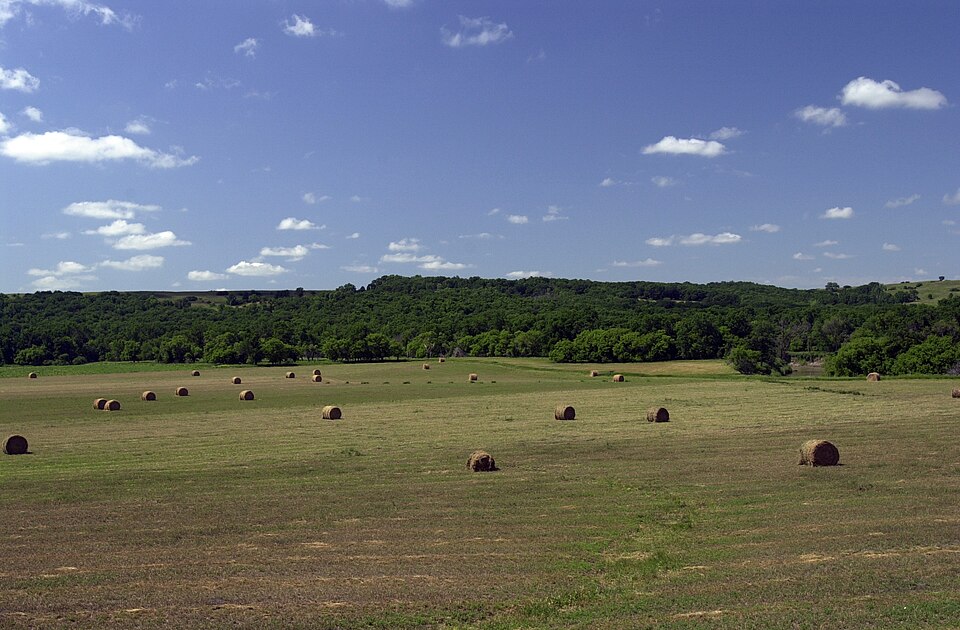

$2,450 an acre is the average for farm real estate here, against $4,500 nationally (NASS, 2026). Pasture averages $1,200.
Land sold for back taxes
Two years after taxes fall due, the county auditor serves notice of foreclosure by June 1; the lien forecloses on October 1 and the county takes the land by tax deed. Until the county sells it, the former owner or close family can buy it back. The county's sale of tax-deed land begins on the third Tuesday of November, each parcel with a minimum price, and a buyer can pay a quarter down and the rest over up to ten years at no more than 12 percent. Anyone behind on taxes in any county cannot be the high bidder.
What to do: Ask the county auditor for the November list and its minimum prices, which are published at least ten days ahead. Land that does not sell can be listed with local brokers between sales, so ask about last year's leftovers too.
Source: N.D.C.C. ch. 57-28
Septic before you build
A septic system needs a permit from the local public health unit before work starts, and the installer must be licensed by the Department of Environmental Quality under a statewide program begun in 2025. The Department is still drafting its rules, and requirements have differed from one health unit to the next.
What to do: Call the public health unit that covers the county before you make an offer, and ask what it needs for a new system on that parcel.
Being taxed as a farm
Farmland is assessed on its productivity, not its sale price. Land platted since 1981 stops counting as agricultural when four of seven tests are met, among them a parcel under ten acres not next to other farmland, non-farm zoning, and a sale price over four times the county's average farm value. Farm buildings are exempt, and so is the farmhouse, but only while a farmer lives in it: someone on ten acres or more who earns at least 66 percent of their income from farming.
What to do: The seller's tax bill may leave the house out entirely. Unless you will farm for a living, ask the assessor what the house will be assessed at once it is yours.
Old well records
A household or stock well using under 12.5 acre-feet a year needs no water permit, though its owner can apply for one to fix a priority date. Drillers must file a report within 30 days of finishing or abandoning a well, and the Department of Water Resources maps scans of the drillers' logs.
What to do: Find the parcel on the Department's map service and read the logs of the nearest wells for their depth and what the driller found.
Source: N.D.C.C. §61-04-02; Department of Water Resources, MapServices
Laws change. Check the source before you rely on a date or a deadline, and ask the county office named, because local rules sit on top of these.