The owner has three years to redeem, and the state says itself that its tax deed is not clear title.
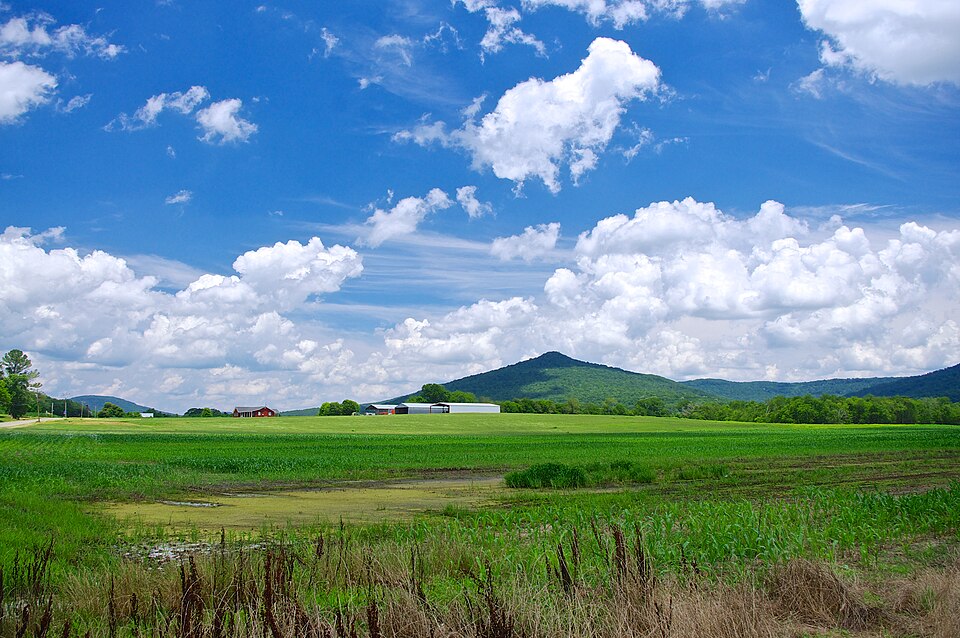

$4,250 an acre is the average for farm real estate here, against $4,500 nationally (NASS, 2026). Pasture averages $3,500.
Land sold for back taxes
The owner of land sold for taxes can redeem it within three years of the sale by paying the taxes, interest, fees and penalties at 12 percent a year. Land nobody bids on is held by the state, and the Department of Revenue sells it on request: an assignment of the state's certificate if it has held it under three years, a tax deed if longer. The Department says that neither one gives clear title.
What to do: Read the Department's county lists of state-held land, and get a title opinion before you bid, as the Department itself advises. Back taxes follow the land, so check for years owed before the sale as well.
Source: Alabama Department of Revenue, Tax Delinquent Property and Land Sales; Alabama Department of Revenue, redeeming tax delinquent property
Septic before you build
Where there is no sewer, the county health department needs the soil tested before it will permit a septic system, by a professional engineer, land surveyor, geologist or soil classifier, and the permit comes before any construction. Shallow, slow-draining or wet soil, or a lot that is too small, may not take a conventional system.
What to do: Have the soil tested before closing, not after. A field that holds standing water after rain is exactly what the test is for.
Source: Alabama Department of Public Health, Can I Live On This Lot?
Being taxed as a farm
Farm and forest land can be taxed on its current use instead of its market value, but only if the owner applies to the county assessing official between October 1 and January 1. A sale ends it: the new owner must apply in that window or be taxed at market value. Converting the land to a use that does not qualify brings back the tax difference for the three years before.
What to do: Ask whether the parcel is on current use now, and apply in the first October-to-January window after you close. On five acres or less the assessor can ask for a management plan from the Alabama Forestry Commission.
Old well records
The Geological Survey of Alabama keeps the state's well records: more than 100,000 paper records, mostly from the notice and completion form drillers file with ADEM. About half are in its online Water Well Finder map.
What to do: Look on the Water Well Finder first. If nothing shows near the parcel, ask the Survey, because half the records are still only on paper.
Laws change. Check the source before you rely on a date or a deadline, and ask the county office named, because local rules sit on top of these.